Dead Cells and the art of flow
Here is a string of texts I sent to a friend just after midnight last night:
Oh God
I finally got an amazing weapon
If I die then it could all be over
Oh ffs. They took it all away again.
This game is great. But emotionally damaging.
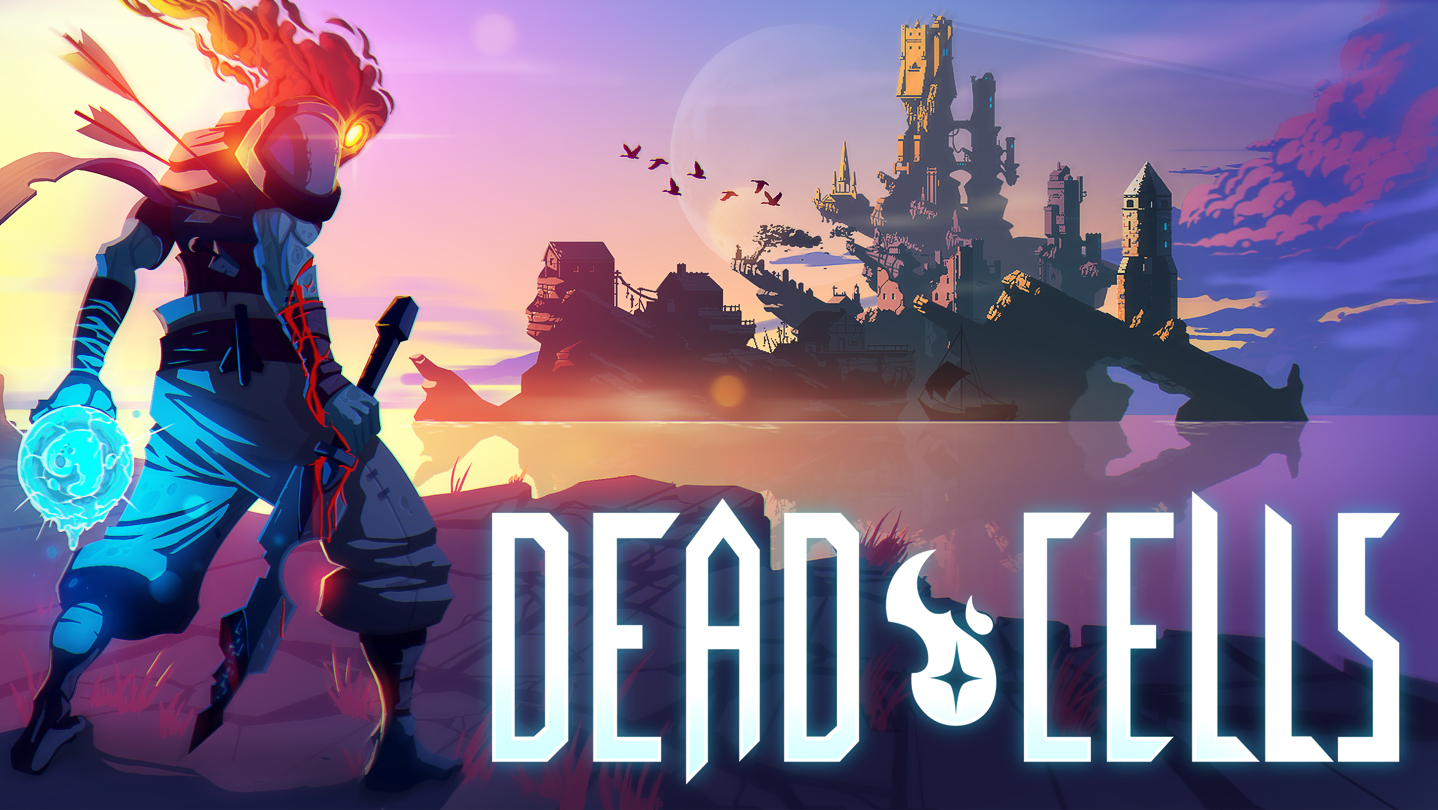
I definitely did not expect to get as absorbed into Dead Cells as I did. I mean, I definitely expected to enjoy it, but a week of turning the console off at 3am probably suggests that my enjoyment turned into a mild obsession. It's easy to see why this game might appeal to me. The developers describe Dead Cells as a "Roguevania" - a truly awful portmanteau of rogue-lite and metroidvania. I love a good metroidvania and while not particularly experienced with rogue-lites, I did have a good time with FTL. So, having now defeated the final boss (only to discover that I was playing on essentially "baby's first rougevania" difficult and there are another 3 higher difficulty levels), I feel like it is a good time to hit the paws button and try and figure out what it is about the gameplay loop in Dead Cells that made it so engaging for me.
I initially thought that it might be the progression system. As the rouge-lite portion of the description suggests, each time you die all your progress, weapons and money are reset. The only way to make permanent progress is to spend "cells" the you collect during the run to unlock improvements to your character and the pool of weapons available to randomly spawn during future runs. The upshot of this loop is that each run you make allows you to unlock things that will allow you to get a little further on the next run, until you eventually defeat the final boss. Considering that I am basically a magpie (incidentally if someone wants to draw me as a fox-magpie cross then go ahead) and like collecting shiny new things, especially ones with numbers that get progressively bigger, the appeal of this system seems obvious.
The more I reflected, however, the more I realised that this motivation can only really explain why I felt motivated to delve into another run through of the game. It doesn't explain why those runs were inherently fun to play themselves. Sure, my tolerance for grinding for non-existent rewards might be higher than most but even I will get bored of repetition eventually - especially when the flow of rewards starts to slow. The progression system might explain why I was up until 3am in the morning, but it does not explain why I felt like I was having fun the entire time.
Instead, I now think that this game is so much fun because of the choices the designers made to help players achieve flow. Flow is a little bit nebulous and tough to pin down. It usually defines the state you enter when you are fully invested in, and enjoying, a particular task. For gamers, it is usually the point at which the controller ceases to be a lump of plastic with buttons on it and instead becomes an extension of their thoughts. A player experiencing flow is not pressing A to make Mario jump but rather is thinking that they need to jump and then jumping. There is no longer a separation between player and input device and that means that the on-screen avatar's actions become the player's. Having a player achieve flow can be incredibly important for making a game fun and rewarding for the player. If I feel as if I am the one reaching the goal rather than just simply guiding Mario to the goal then I will find that experience far more satisfying because it is my achievement, rather than someone else's that I just helped with.
The developers of Dead Cells are really good at helping to push players to experience a flow state. There are lots of little design decisions that help nudge the player towards it, but once I had recognised this there were three decisions that I noticed really clearly while playing.
Firstly, the game's design encourages the player to come up with short-term, manageable goals for themselves. While the overall goal of the game remains to defeat the final boss, the player could have a very different goal on each individual run. On some runs, for instance, you are going to get screwed by the RNG. Your starting weapons are a bit garbage, or the initial set of skills you find don't synergise well with your play style. In these cases I, as the player, can alter my goal from getting to the final boss to simply attempting to collect more cells so that I can be better prepared on a future run. Allowing players to do this quickly, and make that decision for themselves has two benefits. Firstly, it allows subsequent decisions during the run to be made more quickly. Instead of buying an upgraded weapon to replace my bad ones, I might save my money so that I can start with more next time. Because I don't have to spend time agonising over that decision and how it will impact the course of my run, I can get back into gameplay quickly. Secondly, because I pick the goal for each run for myself, that goal is internalised. I am choosing to do this, rather than the game or the avatar. By giving me the agency, the designers are encouraging me to view the avatar as myself rather than someone that I am guiding to the goal.
The second decision is the choice of movement system. Like many metroidvanias, it is designed around speedy and responsive controls. The closer the connection between decision, input, and execution; the less likely the player is to even notice the input. Pressing the button becomes part of the decision, rather than a separate step that I am aware of. Dead Cells takes this idea a step further though and has a combat system that encourages the player to not only play fast, but to play instinctually. If a player kills a few enemies in quick succession, they are rewarded with a small but noticeable increase in their movement speed. The result of this is that players are able to more quickly get to the next enemy in order to extend the duration of this speed boost. There is an interesting gameplay result from this. Rather than being encouraged to slow down and consider the optimal method for taking out each individual enemy from a distance, I am instead encouraged to move from one to another as quickly as possible. I am improvising the encounter rather than planning it. This means that not only is the game pushing me towards playing instinctually, it is rewarding that by ensuring that if I can recognise an enemy attack and respond quickly enough then I can avoid damage from being at close quarters. Because I am forced to play instinctually and I become better at doing so over time, the developers are helping me to shorten the gap between decision and execution. Finally, the decision to make the game a rogue-lite means that the emphasis is shifted from memorising the world and mastering new mechanics as they are unlocked, to mastering the mechanics of movement and combat so as to effectively navigate an ever-changing world map and adapt to whatever weapons the player happens to be given. While enough runs of the game will ensure that the player has a pretty clear idea about what threats, secrets, and pathways will be placed where within a particular level, the initial focus is not on learning those aspects of the game. It is not good enough to understand how a particular encounter with an enemy will play out. The player has to understand the system as a whole in order to be able to deal with unexpected encounters. This has further benefits down the line as well. If I understand what movements and attacks are available to me, then it makes it much easier to deal with new enemy types that are introduced later on without having to sit and observe their patterns. I come across situations all the time in games where the game expects you to utilise a mechanic that it only vaguely hinted at or outright didn't tell you about and you are forced to experiment, possibly having to repeat that section over again as a result. While Dead Cells can surprise you with a new enemy with a new attack pattern, even when you die from one you always know exactly what you could have done to avoid it. The result is that I am constantly being taught how to make decisions more quickly and, thus, improving my ability to improvise encounters appropriately. The level design ensures this. Dead Cells had a lot to teach me about what techniques designers can use to encourage flow, and thus make the game more enjoyable for me. In general, though, there are two questions that I can now ask to figure out why other games do or don't get me into a flow state. Number one: how quickly can the I make and execute decisions? The closer the gap between decision and outcome, the more likely it is that I will feel like they I am in the character's shoes rather than guiding them. A focus on systems that reward understanding, simple controls, and level design that encourages players to learn the full extent of their available tools are all great ways to achieve this. Number two: to what extent am I given agency over goals in the game? While the over-arching goal might be predetermined by the developer, the more freedom I am given to set my own goals within the game, the more likely it is that I will internalise the character's actions in achieving those goals. The upshot is that the separation between me and the character blurs and I am more likely to enter that flow state. Of course, this is not the only way that developers can craft engaging experiences. I have lost countless hours to JRPGs that do the opposite of Dead Cells - they force you to spend time pondering your decisions and the story can often railroad your character into pursuing specific goals. However, where a game emphasises gameplay mechanics over story, I think these are two good questions to ask. Good answers to them can mean the difference between a game that frustrates a player and one the keeps them up until three in the morning going "oh just one more then". That's all for this inaugural Paws Button! Claws crossed that you found it interesting and hopefully see you for the next one! Play pawsome :3 |
Comments
Post a Comment